
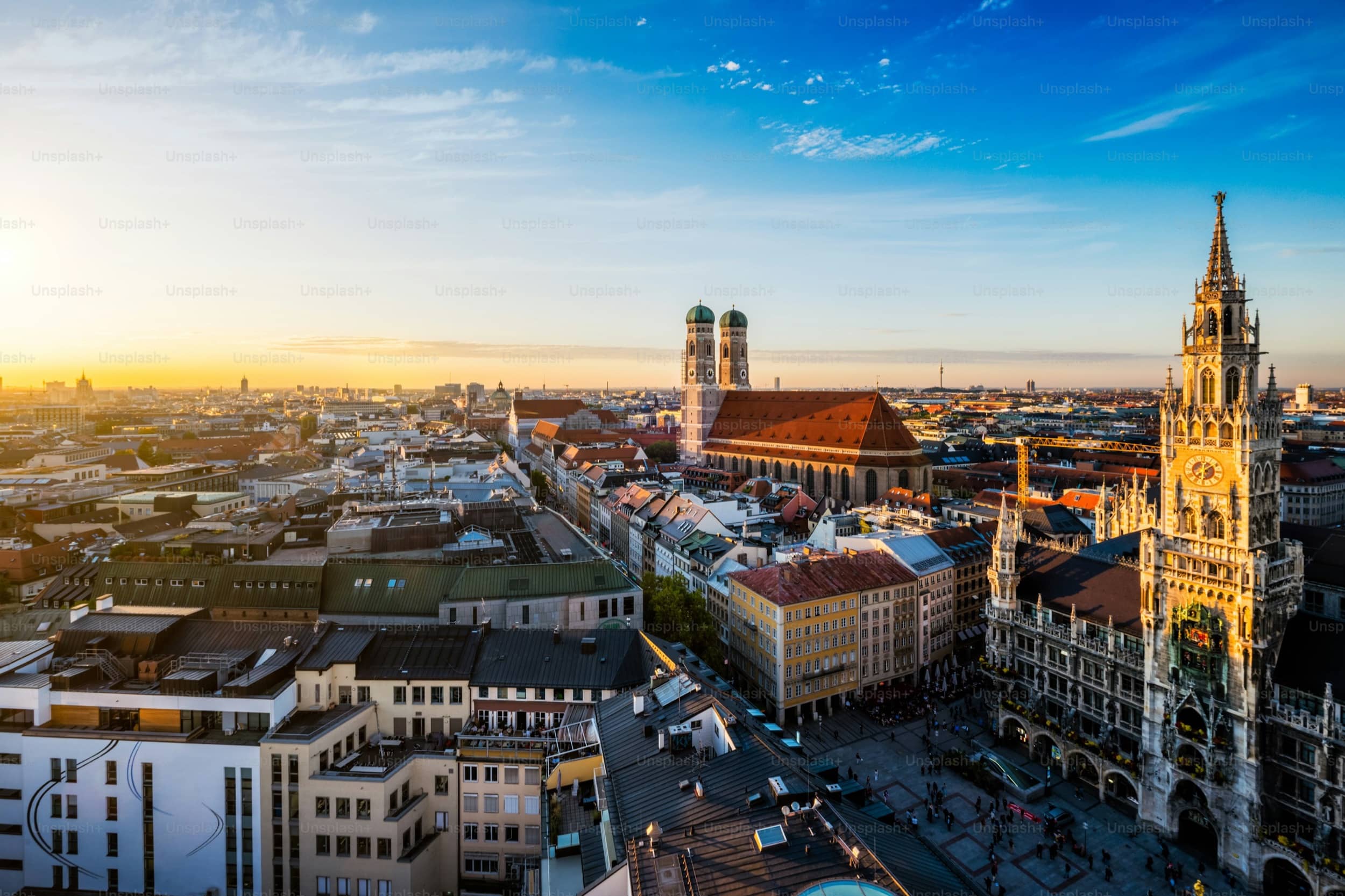
Why Munich
Munich’s core is compact and readable: squares, churches, markets, and parks sit within short walks, so groups can keep a gentle pace. Museums and church spaces create natural teaching windows, and day trips to castles or medieval towns add variety without long transfers.
Top Highlights by Theme
- Marienplatz and Frauenkirche paired with Viktualienmarkt tastings
- English Garden strolls and Isar paths for margin
- Residenz or Nymphenburg for palace context
- Neuschwanstein/Hohenschwangau day with lake walks
Sub-areas / Nearby
- Regensburg (UNESCO old town), Nuremberg, or Salzburg by rail/coach
- Füssen/Schwangau for castles and lakeside walks
Trip Length & Pacing
2–3 Days
- Day 1: Old‑town orientation; church visit and market dinner
- Day 2: English Garden morning, Residenz or museum hour; evening margin
- Optional Day 3: Neuschwanstein/Hohenschwangau day with staged climbs and shuttle options
Best Time to Go
Late spring and early fall bring mild weather. Summer is lively but crowded; build in earlier starts for castle days and reserve timed entries.
Group Logistics
- Airport: MUC with S‑Bahn into the center; U‑Bahn and trams cover most moves
- Walking: mostly level; schedule stair alternatives for church towers/palaces
- Meals: block time in Viktualienmarkt or beer gardens for community
Extensions & Combos
- Combine with Regensburg, Nuremberg, or Salzburg; or extend into Bavarian Alps
- Add a buffer night before or after a castle day for rest
Safety & Stewardship Notes
Move carefully in busy squares/markets; set meeting points before free time. Be respectful in church spaces and follow posted guidance at castles.
FAQs
- Q: Is Neuschwanstein doable for mixed‑mobility groups?\n A: Yes—use the shuttle/horse‑carriage options for the climb, split pace, and add a lakeside path for those skipping interiors.
- Q: Which day trip is easiest from Munich?\n A: Regensburg and Nuremberg are straightforward by rail; Füssen/Schwangau works well by coach for castles and lake walks.
For Churches
How Churches Use Munich
- Morning devotions in Frauenkirche side chapels or palace courtyards before stepping into city stories
- Viktualienmarkt meals, English Garden walks, or Isar river paths for relational conversations and prayer
- Day excursions to Neuschwanstein/Hohenschwangau, Dachau Memorial, or Regensburg with guided processing built in
- Evening donor receptions or choir exchanges in local churches, community centers, or brewery event rooms
What Works Well
- 3–4 nights in Munich with one full-day excursion (castles, Dachau, Regensburg) and one lighter city day
- Early timed castle entries, split pacing between interior tours and lake walks for accessibility
- S-Bahn and coach combinations to keep transfers under 90 minutes
- Reserve rehearsal spaces for ensembles or worship teams ahead of time (ETS coordinates venues and permits)
Sample Ministry Focus
- Day 1: Arrival devotion at Frauenkirche → old-town orientation → Bavarian welcome dinner
- Day 2: Morning Dachau Memorial reflection with chaplaincy support → afternoon English Garden walk and small-group prayer
- Day 3: Castle day (Neuschwanstein + Hohenschwangau) → lakeside worship moment for those skipping interior climbs → evening donor dessert in Munich
- Day 4 (optional): Regensburg Reformation stop or Zugspitze creation-care conversation before departure
What ETS Tours Provides Here
- Faith-aware guides who navigate old-town stories, cathedral etiquette, and Dachau pastoral framing\n- Timed castle entries, Dachau permits, coach drops at Marienplatz, and S-Bahn backup plans\n- Venue sourcing for worship, choir, or fundraising events plus instrument rental and translation\n- Hotel blocks near walkable cores, group air, and 24/7 on-the-ground operations
Our team handles the castle slots, venues, and transit so your leaders can focus on discipleship and care.
Ready to plan Germany?
Save the planning request here and keep the right nonprofit connected from the first conversation.